Last updated October 31, 2026
 Smart locks
 House lockouts
 Re-keying
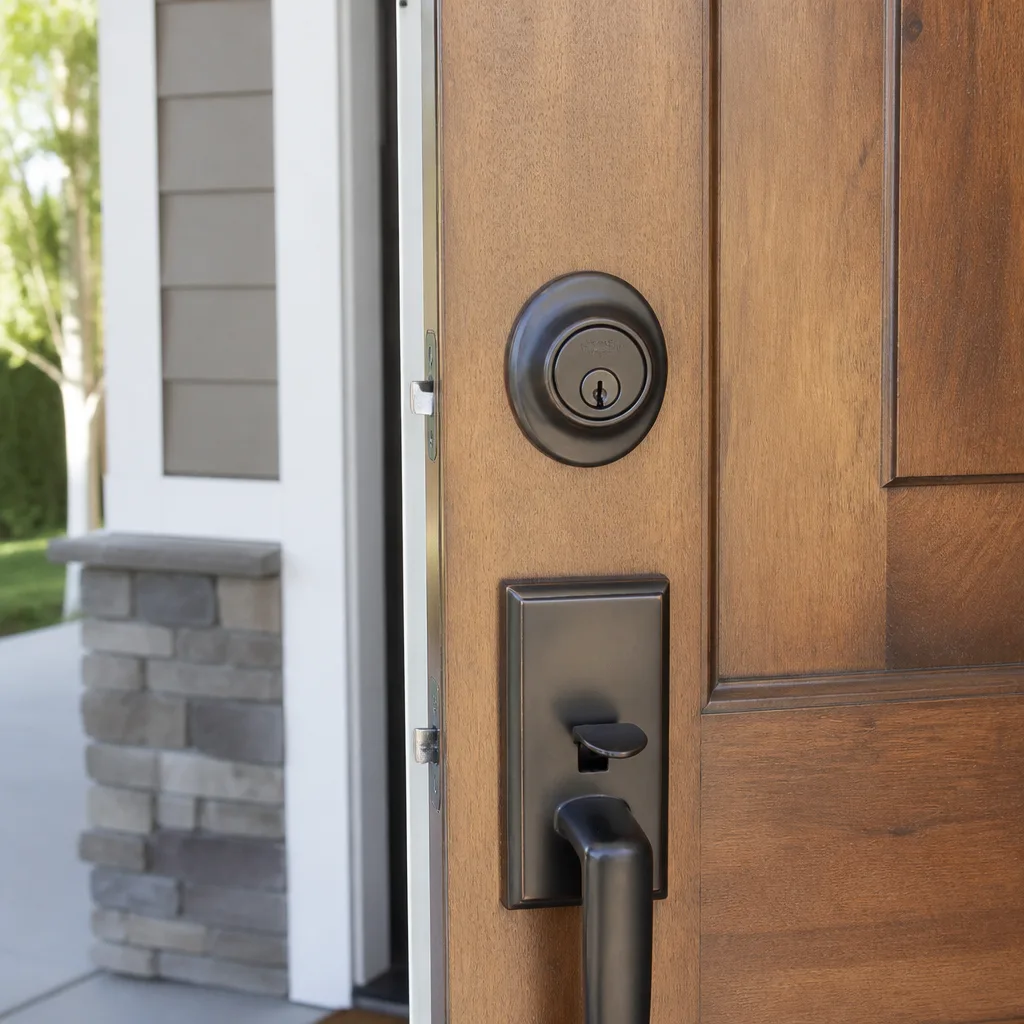 Deadbolt upgrades
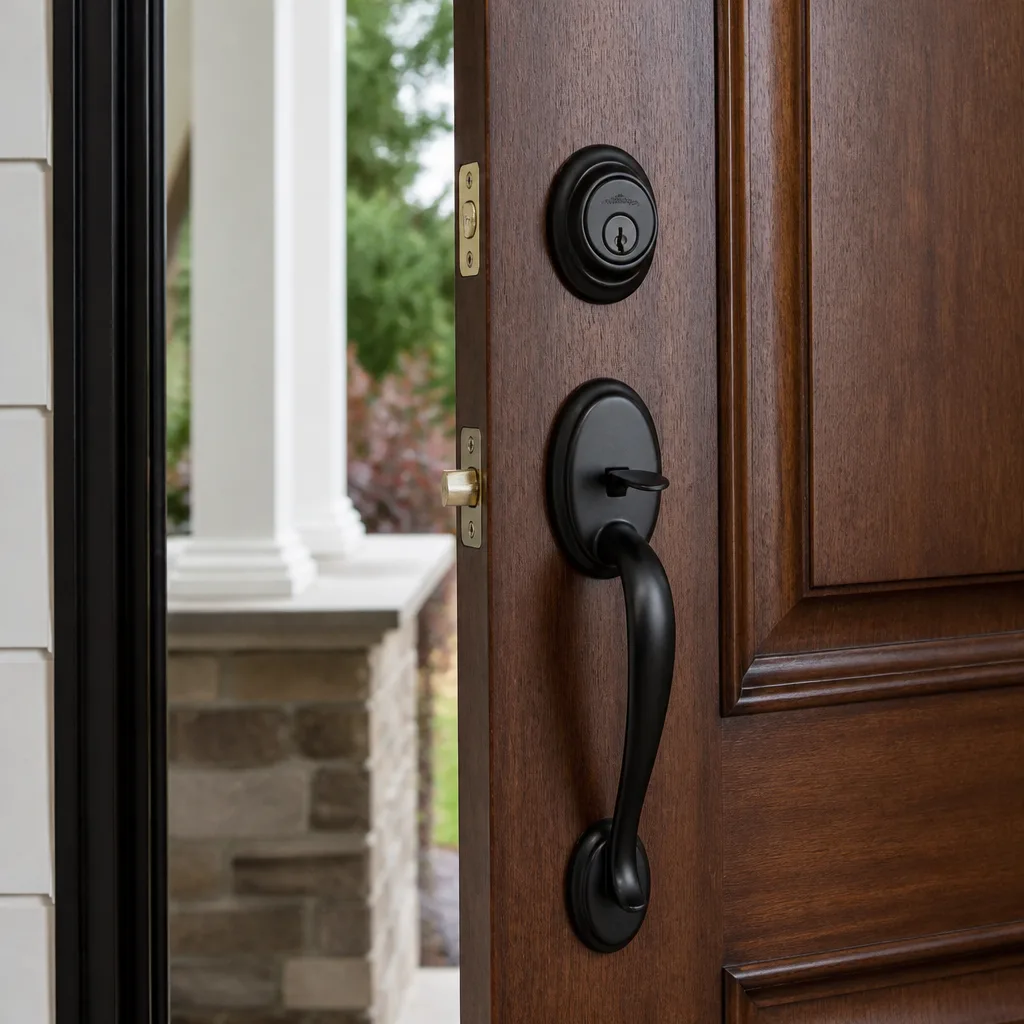 Schlage
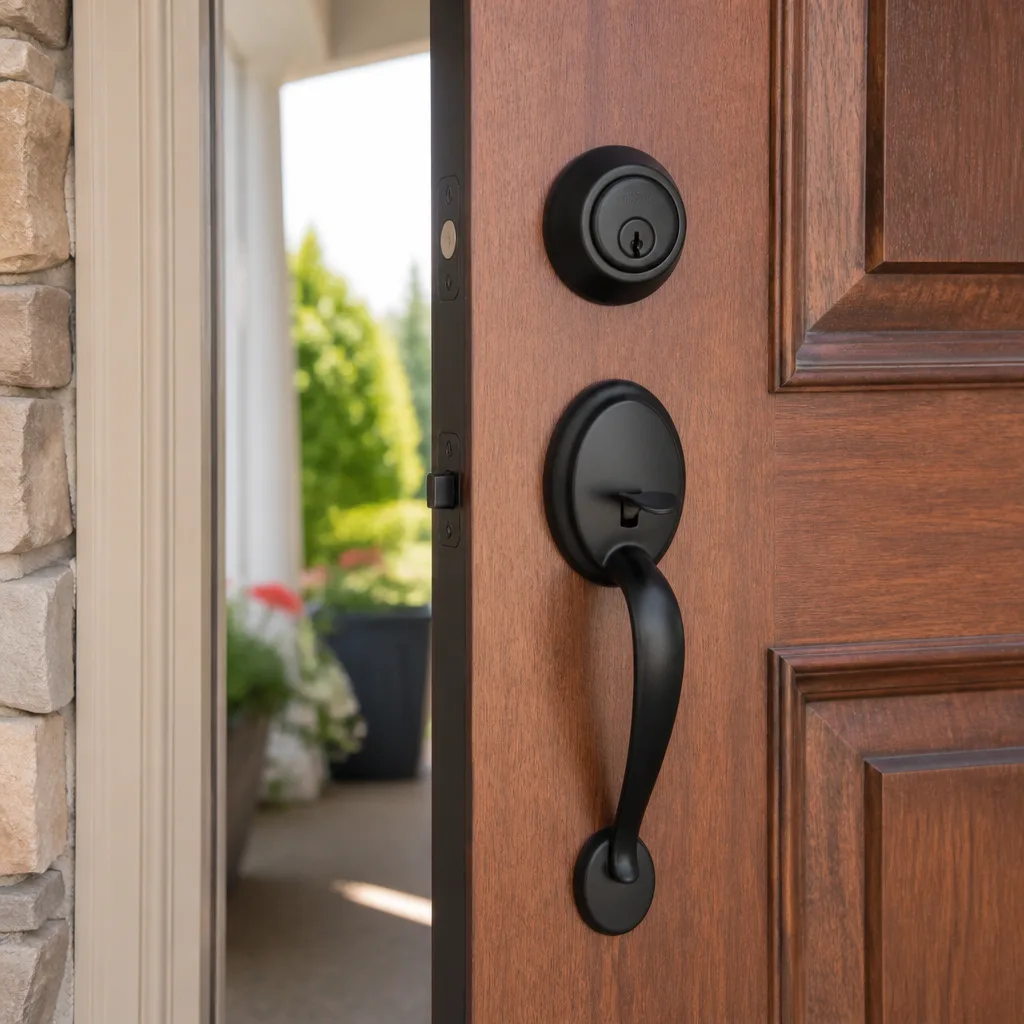 Kwikset
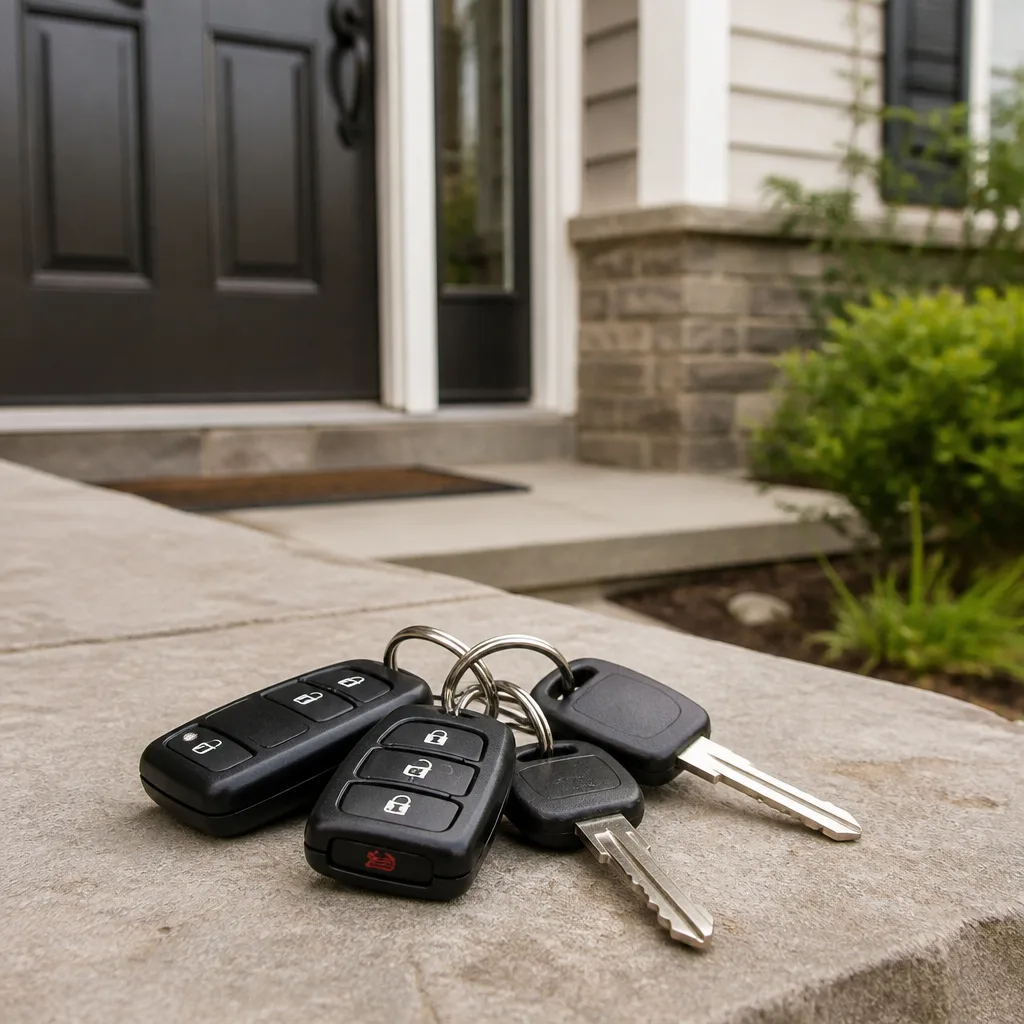 Car keys & fobs
Non-destructive entry first, always - and we re-key Schlage, Kwikset, and Baldwin locks on the spot while you watch
You get a price before we start. It does not change when we arrive. No surprises.
Get your free estimateLocksmith Warning Signs: A Irvine Homeowner’s Reference Guide
Here’s a statistic that should get every Irvine homeowner’s attention: a meaningful percentage of “locksmiths” advertising in Orange County are not locksmiths at all. They’re call-center operators who dispatch subcontractors with minimal training, no local address, and a business model built on drilling your lock, inflating the invoice, and disappearing. The good news is that these operators follow patterns. Once you know the patterns, you can spot a bad actor in under two minutes, even at 2 a.m. with your keys locked in the car. This guide from True Blue Locksmith gives Irvine residents a plain-English reference for what legitimate locksmith work looks like, what it should cost, and what to do when something feels wrong. For more guides & resources, visit our blog.
Quick Answer
The most common locksmith warning signs in Irvine are: a phone quote that doesn’t match the price at your door, a technician who immediately insists on drilling your lock before trying non-destructive entry, no marked vehicle or uniform, and a company name that doesn’t appear in any Irvine business records when you search Google Maps. If you see any of these, stop the job and get a second opinion. A legitimate locksmith will show you identification, honor the quoted price, and attempt the least invasive method first.
Styles & brands we work with
Table of Contents
- The Drill Threat: When Drilling Is Legitimate and When It’s a Scam
- The Phone-Versus-Door Price Gap: Your Rights Under California Law
- Shell-Company Locksmiths: How to Spot a Fake Local Business in Irvine
- Unmarked Vans, No Uniforms, No Invoices: Why These Red Flags Matter
- You Already Paid: The BSIS Complaint, Chargeback, and Security Assessment Process
- Warning Signs That Are Actually Legitimate: What a Good Locksmith Does
- Irvine-Specific Warning Signs: What We See in 92618, 92620, and 92602
The Drill Threat: When Drilling Is Legitimate and When It’s a Scam
Here’s the scenario we hear about most often from Irvine homeowners after the fact: the technician arrives, glances at a standard residential deadbolt, and says something like “Yeah, this is a high-security lock, I’m going to have to drill it.” The drill comes out. Ten minutes of noise later, the old lock is destroyed, a new Kwikset from the van goes in, and the final bill is $400 because “drilling is a specialty service.” The homeowner pays because they’re tired, it’s late, and they just want to get inside.
In our experience, the vast majority of standard residential locks do not require drilling. A competent locksmith with the right tools can pick a Schlage, Kwikset, or Yale deadbolt in under fifteen minutes without damaging the door, the frame, or the lock itself. Drilling becomes necessary only in specific situations: the lock has failed internally and the cylinder won’t turn even with the correct key, the key is broken off inside the plug and can’t be extracted, or the lock is a high-security system like a Medeco or Abloy with restricted keyways that resist standard picking.
Here’s the checklist to use when a technician reaches for the drill:
- Ask for a specific reason. “Why does this lock need to be drilled?” A legitimate answer will reference specific mechanical failure: “The tailpiece is broken inside the cylinder.” A vague answer like “These locks are tricky” or “This brand always needs drilling” is not a reason.
- Ask what non-destructive methods they’ve attempted. Picking, bypassing via the latch, shimming, or using an under-the-door tool are all standard first attempts on a residential lockout. If the answer is “none,” that’s a red flag.
- Ask what drilling will cost before it happens. Some operators quote $29 over the phone and then add $150 for drilling on-site. A legitimate locksmith will quote the drilling price before starting and that price will be the price on the final invoice.
- Ask what the replacement lock will cost. Drilling destroys the old lock, which means a new one goes in. If the technician quotes a replacement lock at $180 that retails for $35, you’re being upsold.
For high-security hardware like Mul-T-Lock or Sargent commercial cylinders, drilling is sometimes genuinely unavoidable. Those locks are designed to resist picking and drilling. But that’s a conversation a legitimate locksmith has before the drill comes out, not after they’ve already told you the price is going up.
The Phone-Versus-Door Price Gap: Your Rights Under California Law
This is the single most reported locksmith complaint in Irvine, and it’s not close. You call, you get quoted $49 for a lockout. The technician arrives, takes one look at your door, and suddenly the price is $220. When you push back, you get a rehearsed explanation: “That was just the dispatch fee,” or “Your lock is a specialty model.” This is bait pricing, and it’s illegal.
California Business and Professions Code Section 9848 requires locksmiths to provide an itemized invoice for any job over a nominal amount, and that invoice must match the price quoted before work begins unless the customer approves a change in writing. The law exists precisely because this trade has a documented problem with bait-and-switch pricing. In practice, what this means for an Irvine homeowner:
- A verbal phone quote is not legally binding, but a written estimate or text confirmation helps. Always ask for the quote in writing, even a text message.
- If the price at the door doesn’t match the quote and you haven’t approved a change, you have the right to refuse service. The technician has not yet done the work.
- If the technician claims the phone quote was “just the trip fee” and the real price is higher, that’s a misrepresentation under California law. You can refuse, ask them to leave, and call another locksmith.
- Never pay in cash for a job you didn’t approve at the quoted price. With a card, you have chargeback rights if the final price was inflated after the fact.
The practical script for the moment: “The price I was quoted on the phone was $X. If the final price won’t be $X, I’m not authorizing the work. Please confirm the total price in writing before you start.” A legitimate locksmith will either confirm the quote or explain in clear terms why the job genuinely costs more and give you the option to decline. A scam operator will get pushy, dismissive, or suddenly offer a “cash discount.” Non-destructive entry on a standard Irvine residential door should fall in the $75 to $175 range depending on time of day. If you’re being quoted $300 or more for a simple lockout with no damage, call someone else.
Shell-Company Locksmiths: How to Spot a Fake Local Business in Irvine
Here’s how the shell-company model works. A call center in another state registers dozens of generic names like “Irvine Locksmith Pros” or “24 Hour Locksmith Irvine.” They buy ads on Google and build simple websites. When you call, you’re not calling Irvine at all. Your call routes through a dispatcher who sends whatever freelance technician is closest. The technician may be competent, or may not. The name on the van won’t match the name you called. The invoice will have yet another name. And when you try to call back with a complaint, nobody answers a phone in Irvine because nobody from that company has ever been in Irvine.
The 90-second Google Maps check is the most effective defense. Here’s the step-by-step:
- Search the company name plus “Irvine CA” in Google Maps. If the company claims to be local, there should be a business listing with an Irvine address. Not a PO box. Not a virtual office in a coworking space. An actual street address.
- Click the listing and look for reviews. A shell company either has no reviews at all or 47 five-star reviews posted in the same week. Both are red flags. Real Irvine businesses accumulate reviews over years, and the reviews mention specific neighborhoods, specific technicians, and specific jobs.
- Check the business registration. The California Secretary of State website has a free business search. If the company name doesn’t appear, that’s a problem. Legitimate locksmiths operating in California are registered. The Bureau of Security and Investigative Services (BSIS) also maintains a license lookup, and a legitimate operator will be licensed and listed.
- Call the number and ask “Where are you located in Irvine?” A real local operation answers with a specific answer: “We’re off Sand Canyon near the 5” or “We’re based in Irvine Business Complex.” A shell operator hesitates, gives a generic answer like “We have trucks all over Orange County,” or names a city that isn’t Irvine.
Irvine’s zip codes make this harder than it should be. 92618 covers a massive area from the Spectrum to Portola Springs. 92620 anchors a stretch of new development. 92602 is Woodbury and the surrounding area. These are big, sprawling zips, and a shell company can claim “92618” without ever having set foot in the city. The address check is what catches them. If the address is a UPS Store on Jamboree, that’s not a locksmith shop.
Unmarked Vans, No Uniforms, No Invoices: Why These Red Flags Matter
Some homeowners dismiss these as aesthetic concerns. “Who cares if the van doesn’t have a logo, as long as the job gets done?” The reason these matter is that they correlate strongly with unlicensed, uninsured, and untraceable operators. A legitimate locksmith company has insurance, and that insurance requires identifiable vehicles. A legitimate technician carries company identification, and their company requires it because a homeowner should never let an unidentified person work on their door locks. A legitimate job produces an itemized paper or digital invoice because the company has a license to protect and wants a paper trail. When none of these things exist, the operator usually has no license to lose and no reason to leave a trail.
Here’s what a legitimate Irvine locksmith look like at the door:
- A marked vehicle. The company name on the van or car, matching the name you called. If there’s no marking at all, ask why.
- Company identification. A badge or card with the technician’s name, the company name, and ideally a BSIS registration number. Don’t accept “I left my ID in the van.”
- A uniform or company-branded shirt. This isn’t about style. It’s about accountability. A technician who wears company branding represents an entity that exists.
- An itemized invoice. Labor, parts, and any service fees listed separately, on company letterhead or a digital invoice from a verifiable company. If the technician wants cash and says an invoice “isn’t necessary,” that’s an unlicensed operator avoiding a paper trail.
One more thing worth knowing: a marked van and a uniform are easy to fake. A determined scam operator can buy a magnet sign and a polo shirt for under $60. These checks catch the lazy scammers. The deeper checks – BSIS license verification and a real Irvine address – catch the rest.
You Already Paid: The BSIS Complaint, Chargeback, and Security Assessment Process
If you’ve already paid a fraudulent locksmith in Irvine, you’re not stuck. There are three concrete steps to take, and they work best in order.
Step 1: File a complaint with the Bureau of Security and Investigative Services. BSIS is the California agency that licenses locksmiths. Their complaint process accepts reports about unlicensed activity, fraudulent pricing, and any operator who misrepresented themselves as licensed. You’ll need the company name, the technician’s name if you got it, the date of service, the amount paid, and any documentation you have. BSIS won’t necessarily get your money back, but they maintain records that inform enforcement actions, and multiple complaints about the same operator build a case that eventually puts bad actors out of business. This is also how shell companies get flagged for operating without a license.
Step 2: Dispute the charge with your credit card company. If you paid with a card, you have chargeback rights under the Fair Credit Billing Act. File the dispute within 60 days of the statement date. Your argument is that the service was misrepresented – the price quoted was not the price charged, or the work performed was not the work described. Credit card companies see locksmith disputes regularly, and a well-documented dispute (phone quote, text messages, final invoice) gets resolved in the cardholder’s favor more often than you’d expect. If you paid cash, the money is likely gone, but you can still pursue small claims court in Irvine if the amount justifies it.
Step 3: Assess whether your security was compromised. This is the part most guides skip. If a fraudulent locksmith worked on your locks, they’ve had access to your keyway, possibly your keys, and they know your address. At minimum, rekey the lock they touched. A rekey replaces the internal pins so the old key no longer works, and it’s a fraction of the cost of replacing the hardware. If they installed a new lock, have that lock rekeyed too – you don’t know who’s had access to the keys that came with it. If the lock they installed looks like an unfamiliar brand or feels loose, replace it entirely. A Rekey Locks in Irvine service can confirm what hardware you actually have and what state it’s in.
Warning Signs That Are Actually Legitimate: What a Good Locksmith Does
Here’s a piece of advice we give Irvine homeowners all the time: don’t use this guide as a reason to distrust everyone. A good locksmith will say some things that sound like “warning signs” to a skeptical consumer, and you should know the difference.
A legitimate locksmith might tell you that your lock is beyond repair. That’s true sometimes. A 30-year-old Schlage that’s never been lubricated, has three broken springs, and a cylinder that’s seized from coastal humidity will not be economically repairable. The difference is that a legitimate technician shows you the broken parts or explains the failure in specific language, and gives you two options: replace with a comparable lock or upgrade to something better. They don’t just say “gotta drill it” and grab the power tool.
A legitimate locksmith might quote a higher price than the $49 bait you saw on Google. Real lock work in Irvine costs real money. A trained technician with a marked vehicle, insurance, and the skills to open your door without destroying it is not a $49 service. The difference is that the legitimate quote comes before work begins, in writing, and doesn’t change when the technician arrives unless the scope genuinely changes and you approve it.
A legitimate locksmith might recommend a lock upgrade. Here’s an example from our own work: a homeowner calls us for a rekey after buying a house in Irvine’s Great Park neighborhood, and we notice the front door has a builder-grade Kwikset that’s been picked before (you can see tool marks around the keyway). We’ll recommend upgrading to a Schlage B560 or higher, or if they’re security-conscious, a high-security cylinder from Medeco or Mul-T-Lock. That’s not an upsell – that’s a professional giving honest advice about a documented vulnerability. The difference is that a legitimate recommendation includes specific reasons tied to what we’re seeing on the door, not a rehearsed speech about “protection packages.”
Our positioning at True Blue Locksmith home is built on a simple idea: we service everything from entry-level Kwikset to commercial-grade Sargent and high-security Abloy, which means we match the recommendation to the actual need. If a Kwikset is adequate, we say so. If it’s not, we show you why.
Irvine-Specific Warning Signs: What We See in 92618, 92620, and 92602
Irvine’s housing market creates lock scenarios that other cities don’t see as often. We work across the Spectrum, Portola Springs, Woodbury, and the Irvine Business Complex, and there are patterns specific to this city.
New-build lockouts are common in Portola Springs and the newer sections of 92618 and 92620. Buyers moving into a just-constructed home get handed a box of keys, and within a week they’ve lost one set, and the builder-grade locks have half a dozen contractor keys floating around from the construction crew. We recommend a rekey immediately after closing – not because the locks are broken, but because you have no idea how many copies of the master key are sitting in a subcontractor’s toolbox. A shell operator will sell you brand-new hardware when a $20-per-cylinder rekey would solve the actual problem. That’s the Irvine-specific upsell to watch for.
The other Irvine pattern is the HOA and property-management lockout. Condos and townhomes across Woodbury and the villages around Irvine Center Drive have gate codes, pedestrian access, and sometimes three layers of security between a resident and their front door. A legitimate Emergency Locksmith in Irvine knows how to coordinate with property management for access. A shell operator will try to drill the mailbox lock or force a gate that they shouldn’t be forcing, because they have no relationship with the property and no incentive to follow access protocols.
Then there’s the weather factor, which sounds minor but matters. Irvine’s inland heat – a string of 100-degree days in August through the foothills – kills lock batteries and expands metal components. A key fob that works at 10 a.m. might fail at 3 p.m. when the car has been baking on a blacktop driveway in 92618. A good locksmith carries replacement batteries and knows which fobs are prone to heat failure. A bad one tells you the fob is “fried” and sells you a $300 replacement when the real fix is a $15 battery and a reprogramming.
Common Mistakes to Avoid
- Calling the first number that appears in Google Ads. Paid ads with generic names like “Irvine Locksmith” are often shell companies that buy top placement. Scroll to the map results and check for an actual Irvine address.
- Paying in cash for a job you weren’t quoted for. Cash is untraceable, and a technician who pushes cash is often avoiding the paper trail that would let you dispute the charge later. Pay with a card, or at minimum get a detailed written invoice.
- Letting a technician drill your lock without attempting picking first. The drill is the fastest way to inflate a bill, because the drill guarantees a replacement lock sale. Always ask what non-destructive methods were tried before authorizing drilling.
- Accepting a verbal quote without a written record. A text message or app-based quote from a legitimate company takes ten seconds. If they won’t put it in writing, that’s the red flag.
- Checking only the company’s website, not the business registry. A website takes an afternoon to build. A BSIS license and Secretary of State registration take paperwork, fees, and actual identity. Check the registry, not the homepage.
- Not rekeying after a lockout performed by a technician you didn’t vet. If a stranger has manipulated your lock, they’ve shown they can open it. Rekeying after the fact closes that vulnerability for a fraction of the price of new hardware.
- Ignoring the invoice in the heat of the moment. Take thirty seconds to read the line items. A $49 labor charge that becomes a $49 service call, a $120 labor charge, and an $89 emergency fee is a bait-price structure you can document and dispute.
When to Call a Professional
Some lock problems are genuinely beyond DIY. If you’re locked out and don’t have a spare key accessible, a professional with picking tools is the fastest non-destructive option. If your key broke off inside the cylinder, extraction requires specialized tools and forcing it usually damages the lock. If you’ve moved into a new home in Irvine and don’t know how many previous keys are circulating, a rekey is a professional job with a clear, fixed scope. If you want to upgrade from a builder-grade Kwikset to a high-security Mul-T-Lock or Sargent system, the installation and keyway prep are not homeowner work. And if you suspect a previous locksmith compromised your security, get a professional assessment of what’s installed and what needs to change. True Blue Locksmith offers free estimates in Irvine – call (877) 358-5506.
Frequently Asked Questions
Check for a BSIS license, a verifiable Irvine street address on Google Maps, marked vehicles, and an itemized invoice that matches the phone quote. You can verify the license on the BSIS website in under a minute, and you should do this before the technician touches your lock.
A non-destructive residential lockout in Irvine typically runs $75 to $175 depending on time of day, lock type, and travel distance. If you’re quoted $49 and then told at the door that it’s actually $250, that’s a bait-pricing pattern and you should refuse service.
No. Drilling is a last resort for failed cylinders, broken keys, or high-security systems that resist picking. If a technician reaches for the drill on a standard Schlage or Kwikset deadbolt without attempting non-destructive entry first, ask them to stop and explain. Most residential locks don’t require drilling.
The drill-and-replace upsell, the phone-versus-door price gap, and the shell-company call center that dispatches unlicensed technicians under a fake local name. All three follow predictable patterns, and all three are avoidable with the checks in this guide.
Yes. True Blue Locksmith works with Medeco, Mul-T-Lock, Abloy, Sargent, and other high-security systems, in addition to standard residential brands like Schlage and Kwikset. That range means the technician who arrives already knows your hardware. Call (877) 358-5506 to confirm coverage for your specific system.
Check the invoice against the quote, verify that the lock operates smoothly with all your keys, and if the technician was someone you hadn’t vetted before the job, schedule a rekey. A Car Key Replacement in Irvine or home rekey closes the access gap and gives you a clean key security baseline.
The Bottom Line
The warning signs of a fraudulent or incompetent locksmith are learnable, and they repeat. The drill-first approach on a standard lock, the phone price that doesn’t match the door price, the shell-company name with no Irvine address behind it, the unmarked van and the cash-only invoice. None of these are subtle, and none require special knowledge to spot. What they require is a homeowner who knows to look, especially during a lockout when the instinct is to just get inside and deal with it later. Perform the two-minute BSIS check, ask for pricing in writing, and don’t let anyone drill a lock that hasn’t been picked first. If the operator balks at any of those steps, call someone else. (877) 358-5506 is a good number to have saved before you need it.
Written by the team at True Blue Locksmith, serving Irvine since 2017.